Monthly Archives: July 2021

Journalist Protection Act introduced in Congress

The Journalist Protection Act (JPA) was introduced Thursday in the 117th Congress. 

According to RTDNA, “The Journalist Protection Act would make it a federal crime to intentionally intimidate or cause bodily harm to a journalist or media organization in the course of newsgathering or reporting. It would bring justice to the journalists and media employees who experienced targeted anti-journalist violence by allowing the Justice Department to prosecute those who intimidate or assault journalists when local prosecutors decline to do so.”

RTDNA Executive Director Dan Shelley wrote, “This legislation comes at a pivotal point for the future of the Fourth Estate. The journalist’s job of seeking and reporting the truth has become dangerous. Today even the most routine stories are met with increased risk. Journalists across the country have reported physical and verbal assault, targeted equipment damage and being shot at while on the job.”

Prepare for release of census data

Poynter is helping journalists prepare for the release of in-depth demographic statistics from the 2020 census, which is expected in the coming weeks.

The data will reveal how the ethnic, racial and voting age makeup of neighborhoods, cities, counties and states has changed since the 2010 census, as well as inform political redistricting. 

Poynter is offering a tuition-free webinar on Aug. 11 to help journalists prepare to cover the changing demographics of their communities.

Sign up here.

Why reporters should cold-call for more thorough storytelling

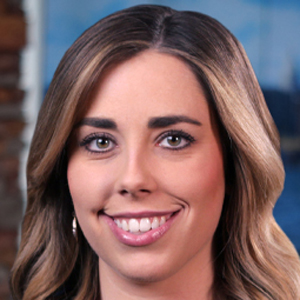
Heather Poltrock

cold-call

/ˈkōl(d) ˌkôl/

verb

  1. make an unsolicited call on (someone), by phone or in person, in an attempt to sell goods or services.

Ah, yes. A very popular tool amongst the sales folks. Welp, I’m going to hijack the term and let you know cold-calling is something reporters can add to their toolbox too.

How about: “make an unsolicited call on (someone), by phone or in person, in an attempt LEARN!”

I think as journalists we sometimes forget how helpful people can, and want to be.

For example, if you regularly attended an editorial news meeting in the fourth quarter of 2020, someone likely pitched ‘lumber prices’.

They were high. Much higher than normal, but why? Supply? Yes, but why?

I needed some answers. So I Googled lumber yards and picked one that appeared to be locally-owned to avoid the corporate permission obstacles.

Our conversation went a little something like this:

 “My name is Heather Poltrock. I work at Channel 7. I know the lumber industry is seeing some unusual pandemic-related problems, especially pricing and I want to know if you can help me understand what is going on so we can better tell the story. Not for an on-camera interview, just for my understanding.”

Our conversation lasted nearly a half-hour and turned into many story ideas.

Here’s the dets. The problem was rooted in the worker shortage plus low-interest rates.

The best questioned I ask—“What do you think the solution is?” 

That answer was the most valuable component of our conversation and I’m glad I thought to ask it.

I’ve used this approach many times without really intentionally dubbing it a strategy.

Our job as journalists is to answer questions, but if you’re not educated enough on the topic to ask the right questions you won’t be able to do a very good job.

Best of luck on your questions quest!

Heather Poltrock
WSAW-TV, Wausau

How to safely connect with viewers on social media

Social media is an incredible tool for connecting with your audience. But the line between sharing and oversharing is a fine one.

Sara Maslar-Donar is the anchor of WKOW’s Wake Up Wisconsin Weekend morning show and reports for the weekday morning show. She was also recipient of the WBA’s ‘Best Online Personality” award, placing second.

She offers this advice for those using their social media pages to connect with viewers and listeners.

When it comes to sharing your personal life, it’s up to your own personal preference. But the advice I can give is this: In this day and age, we all need to be extremely careful about what we let people know.  Reveal to viewers the things that will help them understand who you are and what makes you tick: Your hobbies, your love of animals, your favorite way to spend a Friday night! But remember: these are strangers. They aren’t entitled to know anything you don’t feel safe or comfortable sharing. 

Heather Poltrock
WSAW-TV, Wausau

Poynter offers writing workshop for journalists of color

Poynter is offering a free workshop for journalists of color.

“Power of Diverse Voices: Writing Workshop for Journalists of Color” is taking place Nov. 18-21.

The (workshop) is a transformative, four-day seminar that helps journalists of color find their voice and build skills for writing opinion pieces and personal essays. Opinion writing plays a vital role in explanatory, features and watchdog journalism, and is important in a thriving democracy. Led by Tom Huang, this seminar will foster the diversity of voices necessary in the profession and train the next generation of opinion writers from a wide spectrum of backgrounds. You will learn both through instruction as well as intensive coaching in small writing groups. You will focus on fact-based opinion writing — and using social media to spark a conversation — across platforms.

Applications are due by Aug. 23. Apply here.

NAB issues statement on recent incidents involving broadcast journalists

NAB President and CEO Sen. Gordon Smith

In response to recent incidents of violence involving broadcast journalists, the following statement was made by NAB President and CEO Gordon Smith:

“NAB is gravely concerned by recent incidents of violence directed against broadcast journalists who are covering local news. A cornerstone of American democracy is the right of the free press to document the stories and events shaping our communities and our nation. Journalists should be afforded the respect to safely provide this valuable service to the community without fear of violence, intimidation or harassment.”

On background, there have been multiple incidents in recent days that have put broadcast journalists in danger while they have been covering the news. Such incidents include:

  • A man who shot at two journalists from Graham Media Group’s KSAT-TV (San Antonio, Tex.) reporting at the scene of a house fire was later killed in a shootout with police;
  • A man stole a vehicle from a Capitol Broadcasting’s WRAL-TV (Raleigh, N.C.) news crew following a live shot, later crashing it into a state trooper’s car; and
  • Two men attempted to steal the camera and equipment from a news crew for NBCU’s KNTV-TV (San Jose, Calif.) conducting an interview outside Oakland City Hall.

NAB has created a digital toolkit for journalists offering resources and training for news crews reporting from the field.

SPJ offers free session on forming mission statements for reporting

The Madison Chapter of the Society for Professional Journalists is holding a free virtual training session on July 28 to help journalists set mission statements for their beats.

In 2019, Megan Garvey led the dozens of reporters in her Southern California newsroom as they, for the first time, set explicit “missions” for their beats. Garvey — now the executive editor at Southern California Public Radio and LAist — will explain how and why her team took on that challenge, and how those mission statements have changed how they decide what to cover. There will also be plenty of time for questions from those considering adapting the model to their newsrooms.

The session is the second in a series of diversity, equity and inclusion programming that SPJ Madison is hosting this year to help reporters and editors rethink how they approach their beats. 

The online discussion will run from 12 to 1 p.m. CT and is open to journalists and journalism students anywhere. Click here to register. Registration closes on Monday, July 26 at 5 p.m. CT. 

As a newsroom of just 65 (and growing) covering a region of more than 13 million people, the journalists of public radio station KPCC and its accompanying news website LAist know they can’t cover every news development. That’s why the outlet chose to create a mission to guide all of its reporting and to help reporters craft mission statements or guiding questions that would steer them through the barrage of daily developments. 

The goal, Garvey wrote in a web post describing the project to the public, was to help reporters “spend as much of their time as possible on original stories (and not get stuck echoing information that everyone else is reporting.)”

Today, the reporters’ mission statements appear in their online bios, allowing readers to see at a glance what’s driving their reporting and to ask questions accordingly. And the effort has been recognized as “especially successful” by Trusting News, a project that helps journalists demonstrate credibility and build trust.

Click here to register. Registration closes on Monday, July 26 at 5 p.m. CT.