Monthly Archives: April 2020

Reistad joins CBS 58 Morning News

Meghan Reistad will join Mike Curkov, Pauleen Le, and Justin Thompson-Gee to anchor the CBS 58 Morning News on weekdays from 4:30 a.m. to 7 a.m. on CBS 58 (WDJT-TV) and from 7 a.m. to 8 a.m. on WMLW, The M.

Since graduating from St. Cloud State University in Minnesota, Reistad has worked in a variety of roles as a reporter and anchor. Most recently she was at NBC15 (WMTV-TV) in Madison where she anchored the morning newscast.

She has been very involved with charities in the cities she’s called home, working with a variety of different organizations from Habitat for Humanity to the Second Harvest Food Bank.

“I couldn’t be more thrilled to explore the Brew City,” Reistad said. “I’m excited to join CBS 58’s dynamic morning team and make an impact in southeast Wisconsin.”

“Meghan is a great addition to our morning team and CBS 58,” said Kent Harrell, News Director at CBS 58. “She’s an experienced morning news anchor that our viewers will connect with.”

Reistad starts April 20.

Free webinar provides help with COVID-19 data sources

The coronavirus pandemic is stretching journalists and newsrooms in unprecedented fashion. To help, News University will make Poynter experts available for live, 30-minute Q&A video sessions covering the topics you need help with now.

This free session will be held April 16 at 1 p.m. CT.

Register here

Join Alex Mahadevan, senior multimedia reporter at Poynter’s MediaWise project, as he shows you how to find the best sources for COVID-19 data to fact-check your work. You will leave the session with:

  • Data sources your newsroom can immediately tap into for reporting and fact-checking
  • Tools and resources to help you interpret coronavirus data
  • Advice on how to avoid pitfalls in using COVID-19 data

Media gets report card on pandemic coverage

Is the media doing a good job of covering the COVID-19 pandemic?

Poynter set out to answer the question in this article this week.

“It’s a mixed bag, often depending on political persuasion and where folks get their news. But overall and in general? More than half of U.S. adults believe the media is doing a good job covering the story of the coronavirus.”

Read more here.

Campaign seeks to show gratitude to journalists during pandemic

From davidpwhelan on Morguefile

From RTDNA:

Today, RTDNA, the National Association of Hispanic Journalists (NAHJ), along with a core coalition of over 40 local and national media and nonprofit partners, announced the launch of a joint bilingual campaign to recognize the #PRESSential workers, and #ThankAJourno for their efforts on the frontlines of COVID-19. The coalition asked public to post on their social media accounts at on April 9 and include messages of support and gratitude to journalists and newsrooms.

“Across the country, journalists are stepping up to serve their communities,” said RTDNA Executive Director Dan Shelley. “Newsrooms are expanding coverage, innovating in amazing ways and collaborating with competitors to provide critical information to the public, including messages of hope, help and unity.”

Comprised of a coalition who represent every essential area of the fourth Estate, the #PRESSential campaign will serve to inform the public of the critical work done daily by journalists, unite the world in a spirit of gratitude for the press, and celebrate individuals and newsrooms for their diligence in serving their communities.  

Read the full statement here.

Judy Clark marks 30 years on WEAU-TV

Judy Clark

WEAU-TV news anchor Judy Clark recently marked 30 years on the air at the Eau Claire station.

Clark started at WEAU-TV on March 26, 1990. She graduated from the journalism program at University of Wisconsin-Eau Claire and worked for WAXX-FM as a news reporter before joining WEAU-TV. She began as a reporter and quickly moved into anchoring. She has anchored the station’s 5 p.m. newscast for more than 20 years.

Her husband, Tom Benson, is the operations manager at WEAU. Both started working at WEAU-TV on the same date but didn’t know each other.

A special segment was produced, but because of the pandemic, on-air staff and the general manager had to shoot their comments in separate locations. Past staff members were also asked to send in photos with a sign celebrating her anniversary.


Wisconsin stations bring home 86 Eric Sevareid Awards

Midwest Broadcast Journalism Association

Wisconsin radio and TV stations have won 86 Eric Sevareid Awards from the Midwest Broadcast Journalists Association.

The 86 awards were spread out among 18 stations in Wisconsin:

KBJR 4
PBS Wisconsin 8
UWM Radio 3
UW-Madison TV 3
WBAY-TV 12
WHWC  1
Wisconsin Public Radio  7
WISN-TV 10
WITI-TV 4
WJFW-TV 1
WKBT-TV 4
WKOW-TV 3
WMTV-TV 4
WRST-FM 10
WSAW-TV 8
WUEC 1
WUWM 7
WXOW-TV 4

The full list of winners can be found here.

The WBA Awards Gala is online this year. Details to come.

Congratulations to all the winners!

Column: Public bodies find new ways to meet

Bill Lueders

Believe it or not, this has been a relatively quiet time on the open government front.

In my role with the Wisconsin Freedom of Information Council, I often field calls from reporters and citizens regarding the problems they are experiencing getting access to public meetings and records.

In recent weeks, those calls are down, way down, from maybe two a day to one a week.

This is happening during a time of tremendous upheaval in how meetings are being conducted in Wisconsin, now that they cannot take place in an actual group setting. 

Literally thousands of state and local public bodies are having to implement new methods and embrace new technologies to allow their members and the public to attend meetings through their computers and phones. It’s a vast and transformative undertaking. 

I suspect that this has not worked perfectly in any quarter, but I have heard complaints from none. That’s a good thing.

One Madison resident even expressed in a letter to the editor that it was actually easier to “attend” a meeting remotely via the video-conferencing app Zoom, which allows members of the public to register for or against specific proposals, and submit written and verbal comments.

At a time when the actions and inactions of government can literally be matters of life and death, government bodies are doing their level best to include the public — because they want the public’s attention and they need the public’s help.

My group’s statement on open meetings in the age of COVID-19, issued on March 16, acknowledges the “important work being done by those who serve on public bodies across the state” and “applaud(s) their efforts to operate in as open and transparent a manner as possible.”

The state Department of Justice’s Office of Open Government has issued two sets of guidelines in recent weeks. The first, on March 16, advises public bodies to continue providing notices of meetings, while conducting them via conference calls or remote access that the public can join in on. It also says public bodies may need to accommodate people for whom remote access is difficult. 

In additional guidance on March 20, the office said meeting notices should provide instructions for how the public can attend remotely, and that bodies conducting a videoconference or internet-based meeting should consider creating an alternative dial-in option “so that lack of internet access is not a barrier to observing the meeting.”

The office urged meeting chairs to remind speakers to identify themselves for the benefit of those listening and to not speak over each other. And it said public bodies should “consider recording the meeting and posting it (online) as soon as practicable after the meeting concludes.”

This is all good advice, and there’s no question government officials need all the guidance they can get. 

But there’s something else public officials in Wisconsin deserve to hear at this time from the people they represent: thank you.

Your Right to Know is a monthly column distributed by the Wisconsin Freedom of Information Council (wisfoic.org), a group dedicated to open government. Bill Lueders, the editor of The Progressive, is the group’s president.

Practice responsible reporting on pandemic hoarding

From thelesleyshow on Morguefile

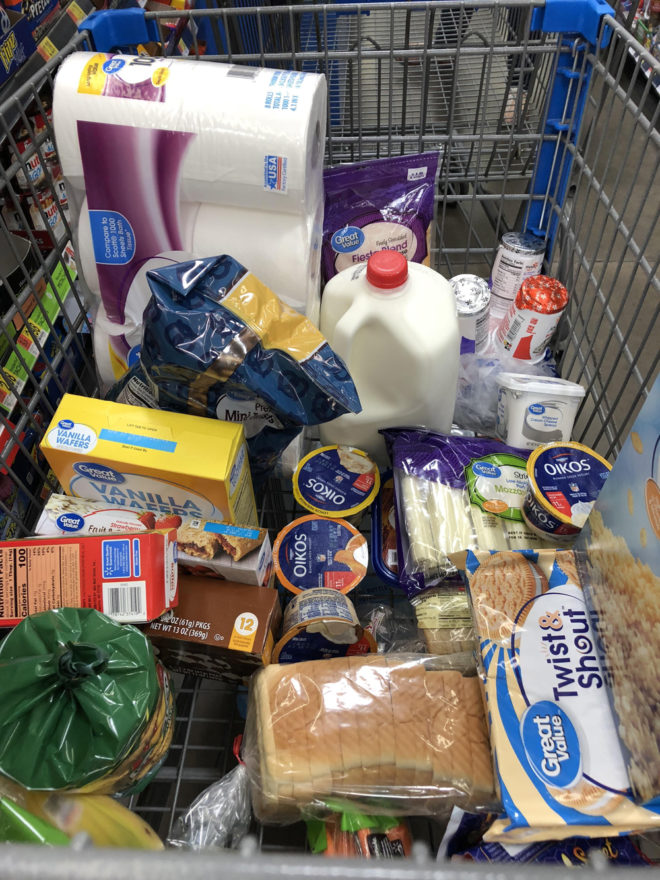
How can a reporter responsibly tell the story about pandemic hoarding without prompting more hoarding?

“Not exacerbating those behaviors depends on de-emphasizing fear and providing context that ties the issue into much larger ones.”

That quote comes from this article from Columbia Journalism Reviewed that reviewed the topic is greater detail. Give it a read.

RTDNA Executive Director offers thoughts for journalists during pandemic

RTDNA Executive Director Dan Shelley wrote recently about how the work of journalists is needed now more than ever, in light of the COVID-19 pandemic.

“Your work on the front lines isn’t easy and it will continue to get more difficult before this is through,” he wrote. “But I am ever grateful that you have courageously shown up and proactively responded to this crisis. I have no doubt you will continue to act in such a manner.”

You can read the letter here.

Free webinar helps journalists with COVID-19 coverage

Join IRE and the Reynolds Journalism Institute as panelists address where journalists can find accurate data about COVID-19, share advice for using the data within larger context responsibly and ways to deliver that information to communities in easily understandable formats for the greatest impact.

You can register for the webinar here

Speakers include Caroline Chen of ProPublica; Armand Emamdjomeh of The Washington Post; Jennifer LaFleur of American University/The Investigative Reporting Workshop; and Cheryl Phillips of Big Local News at Stanford University. 

This webinar is co-hosted by Kat Duncan of RJI and Denise Malan of IRE

The webinar will also be recorded and posted on the IRE website for those who cannot attend live. The webinar is free and available to members and non-members of IRE.

Time:  Apr 3, 2020 11 a.m. CT

Register here.