Monthly Archives: November 2018

Committee finishes work on police body camera bill

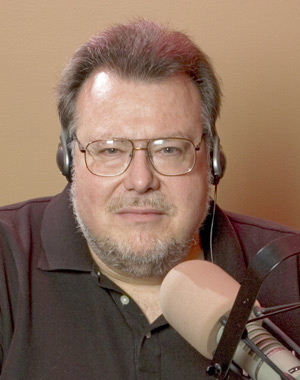
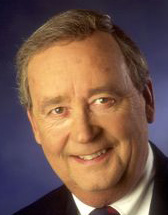
James Friedman and Ben Hart

A Legislative Study Committee has completed work on a bill that would regulate the use of police body cameras in Wisconsin.

Legislation on body cameras passed in the Assembly but was not brought up for a vote in the Senate before the end of the last session. The study committee included lawmakers who supported two different body camera bills in the last session.

WISN-TV News Director Ben Hart and attorney James Friedman represented broadcasters and the media on the committee.

The bill that failed in the last session would have made footage from police body cameras confidential to the public unless it contained injuries, deaths, arrests, or searches. Victims and witnesses would also need to give law enforcement permission to release footage if the videos violated their privacy.

The committee on Tuesday approved final edits to the legislation it’s proposing. A final draft has not yet been released. The bill as it read ahead of Tuesday’s meeting can be found here. The bill, in part, maintains the Wisconsin’s current standard of public records being assumed accessible to the public, unless a records custodian rules against openness using the balancing test. The bill uses the balancing test to determine if video should be released, and asks records custodians to take into consideration the expectation privacy for anyone who appears in the video. The bill also directs records custodians to use redaction where necessary to allow for a video to be released.

The bill also sets standards for record retention and mandates training for police departments that adopt the use of police body cameras.

The committee’s bill is expected to be introduced during the next legislative session.

Madison station recognized for fact-checking

Jessica Arp

A Madison TV station is getting recognition for the fact-checking it did during the midterm elections.

Poynter interviewed WISC-TV’s Jessica Arp about the station’s Reality Check project, which it called one of the oldest local fact-checking projects in the country.

Arp told Poynter that Reality Check is what viewers talk to her about the most.

“We feel strongly, as a station and a company, that this is part of our political brand and this takes us one step further than the horse race coverage that most of the other people in our market and the people in statewide news coverage don’t go,” she told Poynter.

The interview was part of an article about local fact-checking, which states that there was little election-related fact checking in most markets during the recent campaign season.

Nominations open for Shadid Award for Journalism Ethics

The Center for Journalism Ethics at the University of Wisconsin-Madison seeks nominations for the Anthony Shadid Award for Journalism Ethics.

Now in its tenth year, the award recognizes ethical decisions in reporting stories in any medium, including print, broadcast and digital, by journalists working for established news organizations or publishing individually.

The award focuses on current journalism and does not include books, documentaries and other long-term projects. Entries should involve reporting done for stories that were published or broadcast in 2018. Individuals or news organizations may nominate themselves or others.

The nomination window opens today, Nov. 12, 2018.

The Shadid Award includes a $1,000 prize and travel expenses to accept the award and discuss the reporting at an awards ceremony in spring of 2019.

The Shadid Award is different from other journalism prizes in that it seeks to recognize the difficult, behind-the-scenes decisions reporters make in pursuing high-impact stories and in fulfilling their ethical obligations to sources, to people caught up in news events, and to the public at large.

“Especially in a moment when trust in journalism is at a low ebb, it is essential to highlight the difficult choices reporters face in bringing important stories to light and the care that they show for the people involved in their reporting,” says Lucas Graves, chair of the judging committee.

Previous winners of the award include:

  • 2018: Brian Grow and John Shiffman, Reuters
  • 2017: Shane Bauer, Mother Jones
  • 2016: Martha Mendoza, Margie Mason, Robin McDowell and Esther Htusan, Associated Press
  • 2015: David Jackson, Gary Marx, Duaa Eldeib and Anthony Souffle, Chicago Tribune
  • 2014: Adam Goldman, Matt Apuzzo and Ted Bridis, Associated Press

A graduate of UW-Madison, Anthony Shadid died in 2012 on a reporting assignment in Syria for the New York Times. He won two Pulitzer Prizes for his courageous and insightful foreign correspondence. Shadid sat on the Center for Journalism Ethic’s advisory board and strongly supported its efforts to promote public interest journalism and to stimulate discussion about journalism ethics.

Letters of nomination must include:

  1. Name and contact information of the nominators and their relationship to the story
  2. Names and emails of the reporter or reporting team that produced the report
  3. Brief description of the story and a link to it online
  4. Description of conflicting values encountered in reporting the story
  5. Options considered to resolve the conflicts
  6. Final decisions and rationales behind them

Nomination letters of three pages or less should be saved in pdf format and attached to an email sent to ethicsaward@journalism.wisc.edu

Deadline for submissions is January 15, 2019.

By entering this competition, you grant the Center for Journalism Ethics permission to use your entry as a positive example of ethical decision-making if your entry is judged a finalist for the award.

If you are chosen as a finalist for the award, your nomination letter will be posted on our website. If there is anything within the nomination letter that needs to be kept confidential, please let us know.

Coyote visits live shot

Live crews sometimes deal with the unexpected. In this case, a live crew for a Milwaukee TV station was visited by a coyote.

The crew from Fox 6 (WITI-TV) shot the video (above) and later found that the coyote had been chewing on one of their cords.

SPJ to host speed networking event in Madison

The Madison chapter of the Society of Professional Journalists is hosting its second “Speed Networking” event for journalism students from 7-8:30 p.m. on Thursday, Nov. 8.

The event, sponsored by the School of Journalism and Mass Communication, will be in 2195 Vilas Hall at UW-Madison (821 University Ave.) and will include one-on-one sessions with editors, newsroom leaders, and reporters from the Madison area.

During the event, students will have the opportunity to participate in three 10-minute sessions with journalism professionals, as well as network with other editors, reporters, and students during a pizza dinner.

Participating students are asked to bring their resumes, clips and questions about the internship and job hunt process.

Interested students can register here.

Below is a list of editors and reporters who are attending:

  • Dylan Brogan – Staff Writer, Isthmus
  • Judith Davidoff – Editor, Isthmus
  • Ed Reams – News Director, WKOW
  • Emily Shullaw – Designer, Lee Enterprises
  • Molly Stentz – News Director, WORT-FM
  • Rob Thomas – Features Editor, Capital Times
  • Marisa Wojcik – Reporter, Wisconsin Public Television

And the following is a list of SPJ Madison members who will also be onsite to talk with students:

  • Breann Schossow – Producer, Wisconsin Public Radio
  • Hayley Sperling – Engagement Editor, Wiscontext
  • Victoria Davis – Full-time freelancer, Isthmus, Capital Times and Wisconsin Life

NPR’s David Folkenflik visits Wisconsin

David Folkenflik

NPR’s David Folkenflik is in Wisconsin this week and met Wednesday morning, the day after the general election, to talk to supporters of the Wisconsin Center for Investigative Journalism.

Based in New York City, Folkenflik serves as media correspondent for NPR News and as host and editor of On Point from NPR and WBUR, along with Meghna Chakrabarti. He broadcasts from New York each Friday. He will be broadcasting the show from Wisconsin this Friday.

He talked to Wednesday’s gathering about the outcome of the midterm elections, his views on media bias, and how NPR has handled stories about its own management.

Folkenflik spoke in strong support of transparency and open government.

Election Day is finally here

From joshuamiranda on Morguefile

Election Day is finally here. Wisconsin broadcast newsrooms are ready to break whatever news happens today.

Thank you to all the broadcasters who’ve worked hard covering the lead up to the election and your efforts to keep voters informed.

We wish you luck with your election coverage tonight and hope you get a spice of pizza at some point during the evening 🙂

Column: Racine case shows folly of official secrecy

Steve Lovejoy

Secrecy in government, compounded by court-ordered secrecy, gives rise to speculation and rumor. That never serves the public interest.

A case involving Racine City Attorney Scott Letteney and Racine Alderperson Sandy Weidner illustrates that very well. Last August, the city attorney sought an ethics violation sanction against the alderperson for sharing allegedly confidential communications from his office with constituents.

Letteney called for a closed meeting of the executive committee of the city council, at which he presented a PowerPoint of about 30 slides, mostly emails from Weidner to constituents. The committee referred the matter to the Ethics Board for an advisory opinion.

Weidner fought back against the possible ethics sanction and asked Letteney for a copy of his PowerPoint slides. Letteney declined. Weidner filed a request for those records under the state’s open records law. Letteney denied that as well and Weidner filed suit in circuit court.

When the open records suit came before Racine County Circuit Judge Eugene Gasiorkiewicz, he took the unusual step of sealing the entire case, including his decision. The judge told a Milwaukee Journal Sentinel reporter in September that he sealed the case “because of the nature of the action. It’s one that shouldn’t be open. I made a public policy determination.”

State open-records advocates say they have never heard of an open-records suit being sealed.

In September, Weidner defied the judge’s order and talked to reporters, saying that nothing she had sent to her constituents, in her experience, was confidential. According to the Journal Sentinel article, Gasiorkiewicz’s decision and order “don’t seem to reveal anything specific.”

Soon after this article appeared, Letteney and the city of Racine, represented by a Milwaukee law firm, went back to court and asked for a $15,000 sanction for violating the court seal.

Judge Gasiorkiewicz found Weidner guilty of civil contempt of court and ordered her to pay the city’s legal fees. Weidner’s attorneys are appealing the open-records case and the contempt charges to a state court of appeals, where the case remains under seal. That’s where this fracas currently stands. The Wisconsin Freedom of Information Council and others are asking the appellate court to unseal these records.

Some city legal issues are legitimately confidential — personnel issues, proposed contracts or city property purchases come to mind. But if Letteney is arguing that all emails and communications from his office are top secret and not to be shared by alderpersons, we have a great deal of problem with that notion.

From what little we have seen through other media, most of Weidner’s “egregious” emails seem to be garden-variety legal issues and mundane, inconsequential communications from the city attorney’s office. But the closed city council session and the judge’s seal order have put these issues in a deep, dark hole, hidden from public view and impossible to judge.

We’re dismayed that the city attorney ever elevated it to a feud of this proportion. We’re dismayed, as well, that the court made a “public policy determination” to hide it from the public.

In our view such secrecy, on both levels, undermines the right of the public to assess how government officials are conducting public business.

We urge the court of appeals to set things straight, and we hope it does.

Your Right to Know is a monthly column distributed by the Wisconsin Freedom of Information Council (www.wisfoic.org), a group dedicated to open government. Council member Steve Lovejoy is editor emeritus of The Journal Times, Racine, which ran a longer version of this column as an editorial.

Thank you Tim!

WBA Newsroom readers might realize it, or they might not, but much of what this site is today is due to Tim Morrissey.

His contributions to the site are explained this the most recent column from WBA President and CEO Michelle Vetterkind. We encourage you to read it.

“As Tim is moving on to a more relaxing way of life, responsibilities for the site are now being transferred to the WBA team. It goes without saying that Tim is definitely responsible for making the site the valuable resource it is today.”

Thank you, Tim. Your dedication to the quality of broadcast journalism in Wisconsin!

Retired WITI consumer watchdog dies

Tom Hooper - Credit Milwaukee Journal Sentinel

A man known for being a consumer watchdog for Milwaukee area viewers has died.

Tom Hooper worked in local news for 35 years, mostly as the watchdog reporter for WITI-TV. He died Oct. 19 in Georgia. He was 85.

Hooper’s reports changed Wisconsin, leading to changes in laws dealing with the monitoring of abused children, school bus safety, and testing for real estate licenses, according to the Milwaukee Journal Sentinel.

He was awarded a Wisconsin Silver Circle Award in 2010 by the Midwest Chapter of the National Academy of Television Arts and Sciences.

Before working at WITI, Hooper worked as an anchor at WKOW-TV. He worked there for six years before moving to WITI in 1964.

Hooper retired from WITI in 1999.

A memorial service will be scheduled at a later date.