Monthly Archives: July 2020

Guide seeks to demystify COVID-19 statistics

A new guide from RTDAN seeks to make it easier for journalists to understand the stream of data and statistics that health officials provide about the progress of the disease.

“This guide to common COVID metrics is designed to help journalists know how each data point is calculated, what it means and, importantly, what it doesn’t mean.”

Check it out here.

Learn how to build trust with your audience

RTDNA

This free opportunity comes from RTDNA:

New research shows just a couple of sentences can make a difference in how audiences perceive local news stories – whether they trust you and will come back for more, or not.

Grab your lunch and join us on August 4 at 1 p.m. CT to hear what you need to know about how viewers decide what to trust, and how you can easily incorporate trust indicators into your reporting. Bring your questions!

Register

This 30-minute lunch and learn is free and open to all. Registration required.

TRAINERS:
Lynn Walsh | Trusting News project

Mike Canan | WCPO, Trusting News project newsroom partner

UW researcher talks about truth, trust, future of journalism ethics

The Middleton Public Library last week hosted an online talk with UW professor Kathleen Culver titled “Truth, Trust, and the Future of Journalism Ethics.”

Culver talked about how current effects have affected media practices and trust in journalism.

The entire discussion is available here.

Letters offer view of how openness laws are being interpreted

The Office of Open Government recently posted its latest batch of letters responding to requests to interpret and enforce the state’s open records and open meetings laws. The letters provide insight into how the Wisconsin Department of Justice is handling questions about open records and open meetings;

Jonathan Pinnow: A chiropractor wants to know “the statute for patient files record keeping.” OOG’s response—an overview of the open records law—is largely irrelevant. There must be some statutes or rules or guidelines for record-keeping by chiropractors, which is what this guy is asking about. It would have been better to just say “I don’t know.”

Tim Stocks: Resident of Brodhead asks, “Is information gathered by security cameras on public property subject to FOIA requests?” He gets essentially the same response as Pinnow. I think the answer to this question is yes, assuming the cameras on public property are government cameras.

Tim McCumber: Sauk County resident says he was denied access to the corp counsel’s “annual personnel review” and minutes from a closed meeting. OOG agrees that the corp counsel’s employment evals are subject to release, which is helpful; it also notes that there is no requirement that minutes be kept, although they may well have been. 

Ramona Moody: Grantsburg resident says officials at a town board meeting were “insisting that everybody in attendance must sign in and provide contact information.” OOG helpfully concludes that “the open meetings law does not require attendees of open meetings to sign in or provide their contact information.” This is good clear advice, but Moody’s letter, like all those in this batch, was sent before what we now recognize as a pandemic was recognized as a pandemic. Signing in at meetings is probably not an ongoing practice.

Jeffrey Seering: Reedsburg resident says the Sauk County Board came out of closed session and voted in open session to issue subpoena, something not on the meeting agenda. Asks, “Are subpoenas issued by a county board committee chairman, a non-judicial act, covered by any closed records rules?” OOG responds with boilerplate open meetings and open records explanations, saying it has “insufficient information to evaluate whether a violation of the open meetings law occurred.”

Donald Vogt: Manitowoc resident complains about being asked to pay $88 for court records. OOG’s response is largely unhelpful. It acknowledges “other laws that authorize an authority to charge other fees fall outside of the public records law. ” But OOG doesn’t specifically note that circuit courts can statutorily charge $1.25 per page, which is quite likely what Vogt’s inquiry was about, or that clerks of court should provide an opportunity for in-person inspection without charge, except for desired copies. How hard would it have been to explain this?

COVID-19 harmful to journalists’ mental health

The work of covering the COVID-19 pandemic is taking its toll on the mental health of journalists. 

The Reuters Institute for the Study of Journalism and the University of Toronto interviewed 73 journalists from international news organizations in June and found:

70% suffer from some levels of psychological distress and responses suggest that 26% have clinically significant anxiety compatible with the diagnosis of Generalized Anxiety Disorder which includes symptoms of worry, feeling on edge, insomnia, poor concentration and fatigue.

Around 11% of respondents report prominent symptoms of post-traumatic stress disorder, which include recurrent intrusive thoughts and memories of a traumatic COVID-19-related event, a desire to avoid recollections of the event, and feelings of guilt, fear, anger, horror and shame.

Read more here.

Group pushes for bill to protect journalists

A group is advocating for Congress to pass a bill to protect journalists.

The News Media for Open Government Coalition is promoting the Journalist Protection Act, which was introduced in a previous Congress, would “make it a federal crime to intentionally cause bodily injury or threaten a journalist in a manner designed to intimidate him or her from gathering or reporting the news.” 

The bill would give federal prosecutors the ability to anyone who assaults or intimidates journalists if local or state prosecutors won’t.

You can read more about it here.

EXTENDED: Help research into digital journalism in Midwest newsrooms

From MushyTaters on Morguefile

Can you help a researcher study digital journalism in Midwest newsrooms? Read more about it here:

Newsroom Managers and Digital Journalists. I am a graduate student conducting research examining digital journalism in Midwest newsrooms. Please complete this 10-15-minute survey. The results of this study will increase our understanding of the resources and education available to digital editors and the newsroom climate as it pertains to digital journalists. All information is confidential, and none will be provided to your employer. Since this is not part of your work, I suggest completing the survey on personal time and personal devices. At the end of the survey, you will have the option to sign up to receive a summary of the survey results once it has been analyzed.

The survey URL is: https://iastate.qualtrics.com/jfe/form/SV_ah0ZHAKt75Z45Lv.

Survey results are due July 29.

Please contact Sarah Muller at smuller@iastate.edu with any questions.

Get engagement without relying on click bait

Morguefile license

You’ve gotten great at generating engagement on your social media profiles, but you can’t help but notice that you’re relying on click bait to do it.

How do you continue to get the engagement you need to hit your goals while providing your audience with something meaningful to engage with?

Knight-Cronkite News Lab has these idea to share. Check them out.

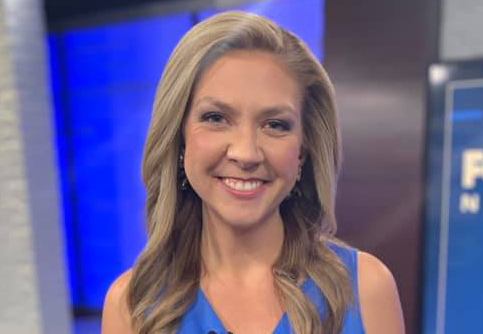
Spencer to join Fox 6 Wake Up anchor desk

Suzanne Spencer

Suzanne Spencer is moving from the nightside team to the morning show anchor desk at Fox 6 (WITI-TV) in Milwaukee.

Spencer has been a reporter and Saturday night anchor at the station for nearly three years.

“The people here are so special to me,” she wrote. “You believe in the truth, in giving a voice to everyone and you are relentless in your pursuit for what you believe is right. It inspires me in so many ways and energizes me to find new ways of telling your stories.

Spencer began her career at WSBT-TV in South Bend, Indiana as a multimedia journalist covering northern Indiana and southwestern Michigan. She quickly moved up through the ranks and was promoted to be an evening anchor and special projects reporter.

She starts her new position on Aug. 3.

Make design more inclusive: Defeat unconscious bias in visuals

The following Poynter webinar is being held next Wednesday, July 22, and its FREE:

Make Design More Inclusive: Defeat Unconscious Bias in Visuals

Webinar, July 22, 2020 at 2 p.m. Eastern

Design tells its own story, and great designers want their work to reflect the diversity of our world. In this one-hour webinar, UX/UI designer Tan Ly will provide tools to counteract unconscious bias in yourself and your audience.

If you’re a designer or editor for digital and print media or work in marketing, this training is for you. You will become aware of how to represent diversity throughout your products, use data in ways that include all populations, creatively problem-solve when getting physical access to diverse sources is a challenge, and ensure that you engage a diverse group of freelancers when outsourcing.

Cost: Free, thanks to support from the Society for News Design.

Enroll Now