Monthly Archives: February 2026

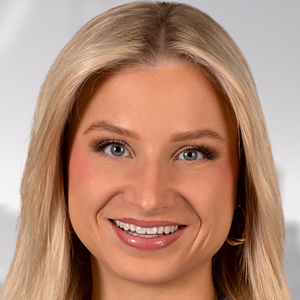
Kendall Keys named weekend anchor on WISN-TV

Kendall Keys will be the new weekend evening news anchor on WISN-TV in Milwaukee starting March 1. She will join meteorologist Gino Recchia during WISN 12 News at 5:00 p.m., 6:00 p.m. and 10:00 p.m. on Saturdays, along with WISN 12 News at 5:30 p.m. and 10:00 p.m. on Sundays. Keys will also provide reporting during weekday newscasts.

“Kendall is a gifted journalist who seamlessly connects viewers to the heart of each story, breaking down complex issues and sharing the practical implications for our communities,” said Shawn Oswald, President and General Manager of WISN 12. “We’re so honored to have her at the anchor desk on weekend evenings.”

Keys has served as a reporter for WISN 12 News since August 2022 covering major stories affecting communities across southeastern Wisconsin. Her reporting included coverage of Milwaukee Public Schools, where she pressed district leadership for transparency and accountability amid a financial reporting scandal. Keys was also among the first journalists on scene in the immediate aftermath of the officer-involved shooting during the Republican National Convention, providing real-time live updates during the high-profile public safety event. In addition, Keys’ advocacy reporting has driven meaningful outcomes for local families. In one case, a Milwaukee family credited her with helping bring their vulnerable loved one home from across the country weeks after she was reported missing.

“I am so excited to step into this new role at WISN 12 News,” Keys said. “Working alongside this talented team has pushed me to grow as a journalist, and I feel incredibly lucky to be part of a newsroom that cares deeply about our community in southeastern Wisconsin. Milwaukee has become home, and I’m proud to continue sharing the stories that make this city so special.” Prior to joining WISN 12 News, Keys worked at WNEM-TV5 in Michigan, reporting on significant news events like the Flint water crisis, a 500-year flood, and a tragic school shooting. Keys is a Midwest native, having grown up in Fort Wayne, Indiana. She also graduated from Indiana University, where she studied broadcast journalism, public relations, and criminal justice.

Williams named permanent host of TMJ4’s ‘Milwaukee Tonight’

TMJ4 (WTMJ-TV) in Milwaukee has announced that Andrea Williams has been named the new permanent anchor of TMJ4’s 6:30 p.m. news and entertainment program, “Milwaukee Tonight.”

Williams joined TMJ4 News in May 2022 as a specialty reporter, quickly making her mark with her ability to shine a light on people in the community whose stories often go untold. Over the past three months, she has been serving as the interim host of “Milwaukee Tonight.” According to News Director Tim Vetscher, one viewer recently wrote in to TMJ4 summing up Williams’ impact on the show, writing, “You bring enjoyment, happiness, and comfort as you share positivity and enthusiasm.”

“It’s those qualities— authenticity, warmth, and focus on uplifting storytelling—that make Andrea the perfect choice to lead Milwaukee Tonight moving forward,” Vetscher said.

Before joining TMJ4, Williams served as a radio personality during morning drive in the city for 25 years, including 20 years at Jammin’ 98.3, where she was also the News/Public Affairs Director for the Milwaukee Radio Group.

A native of Louisville, Kentucky, Andrea moved to Milwaukee in 1996 to work at WKKV-FM, V100.7. Beyond radio, she spent 10 seasons as the Milwaukee Bucks’ original in-arena host and six years as a Bucks Energee! dancer, and she hosted and executive produced “Our Issues Milwaukee” and “Connect MKE” on Milwaukee’s CW 18 and My 24.

Williams earned her bachelor’s degree in radio/TV communications from Central State University in Ohio. She is a member of Alpha Kappa Alpha Sorority, Inc., and the Wisconsin Chapter of the National Association of Black Journalists (NABJ). In 2016, she was named one of Wisconsin’s Most Influential African Americans.

According to Williams, the commitment to amplifying community voices has been a guiding force throughout her career—and continues now as she takes the helm of “Milwaukee Tonight.”

Column: A FOIA fight over immigration records

The headlines are full of stories about the Trump administration’s aggressive new approach to immigration enforcement. We hear about ICE raids and mass deportations. But there’s another, less publicized policy change that’s making it difficult for immigrants to defend themselves from deportation, even when they have a strong claim for immigration relief. 

The Department of Homeland Security has how it responds to federal Freedom of Information Act (FOIA) requests from immigrants facing deportation, in a way that deprives many immigrants of their only tool for obtaining information they need to prove they deserve to remain in the country.

Immigration court immigrants no formal right to discovery, the process by which the parties exchange information to ensure a fair, fact-based process. As a result, immigration attorneys must rely almost exclusively on FOIA requests to obtain a noncitizen’s Alien Registration File (“A-File”) from agencies within the U.S. Department of Homeland Security (DHS). 

A-Files typically include prior immigration applications, enforcement records and notes from interviews. But these documents frequently contain falsehoods and inaccuracies, particularly where summaries replace verbatim transcripts and trauma affects the ability of immigrants to tell their stories. Immigration attorneys need access to their clients’ A-Files so they can identify and challenge inaccuracies in the records and hold the government to its burden of proof. 

My friend and fellow attorney Gabriela Parra practices immigration law in Wisconsin. Many of her clients are asylum seekers now living in Wisconsin who fled to the United States because they feared persecution in their home countries. Since April 2025, she has observed a marked change in how immigration agencies respond to the FOIA requests she files on behalf of her clients. 

The agencies are refusing to provide documents, or heavily redacting the documents they provide, thus denying Parra the information she needs to prepare her clients’ cases. In multiple cases, asylum seekers represented by her firm have asserted that they articulated a fear of return during border interviews, while DHS claims the opposite. 

FOIA requests in these cases resulted in partial A-File disclosures, with interview notes withheld entirely. In other words, DHS has withheld the most important information that would help Parra prove her clients’ version of events.

Late last year, I joined Parra in filing a asking the court to enforce FOIA. Our client in this case is a foreign national who filed an asylum application before he obtained legal assistance. He is now facing removal proceedings in immigration court. 

In response to Parra’s FOIA request, DHS provided some documents, but they contained serious inaccuracies. Moreover, the agency produced only eight pages of unredacted records and 14 pages that were heavily redacted. It fully withheld 31 pages of our client’s file, including records necessary to identify and challenge errors. 

Days after we filed our FOIA lawsuit, DHS provided us with some additional files. But others are still missing, and our client’s removal proceedings are looming. We are in a race against time to get our client’s records so he can make the strongest asylum case.

Immigration lawyers across the country are fighting similar battles against the administration’s FOIA practices. A December 2025 alleges that the government is intentionally blocking FOIA requests. It says this denies immigrants the information they need to avoid “life-altering impacts” including “family separation and prolonged detention.”

Our country’s current fight over immigration enforcement is also a fight over government transparency. Here in Wisconsin, we are doing our part.

Your Right to Know is a monthly column distributed by the Wisconsin Freedom of Information Council (), a nonprofit, nonpartisan group dedicated to open government. Elisabeth Lambert is the founder and principal of the Wisconsin Education Law and Policy Hub (). Thanks to for her help on this column.