Monthly Archives: December 2025

Column: Protect transparency, save WisconsinEye

Every year in Wisconsin state government, billions of taxpayer dollars are spent on programs and policies that impact every citizen, community, school and business.

While many people roll their eyes and tune out the sometimes messy, partisan, unpredictable work of state government, WisconsinEye Public Affairs Network encourages citizens to lean in. For the past 18 years, Wisconsin’s equivalent to C-SPAN has provided an inside look into the workings of state government. This inside look, which I have been involved in from the start, has included:

  •  Free, live and unedited coverage of the Wisconsin Legislature, executive branch, and state Supreme Court.
  •  Fourteen thousand hours of searchable and shareable archived video of official state proceedings.
  • An additional 16,000 hours of unedited and spin-free coverage of news conferences, interviews, campaigns, elections, and related civic events that add context and perspective.

As the nation’s first independent, non-government-controlled state Capitol network, WisconsinEye does not favor the political left or right, but is rooted firmly in that all-important middle ground where diverse voices are welcome and informed dialogue contributes to positive outcomes for Wisconsin. The transparency that it delivers is essential to building the trust that keeps democracy functioning. Once citizens in a democracy come to understand how decisions are made, they can better use their voices and voting power to shape outcomes.

As an independent not-for-profit resource, WisconsinEye has relied on charitable donations to support its lean annual budget of $900,000. But this funding approach is no longer sustainable in what has become a highly competitive, post-pandemic philanthropic environment. That’s why the painful decision was made to shut down the functions of WisconsinEye, beginning Dec. 15, until the funding gap is plugged.

To this end, WisconsinEye is asking the Legislature and governor to reconfigure a previously designated $10 million matching grant approved in a unanimous bipartisan act, to help WisconsinEye build a permanent $20 million endowment. We are asking for lawmakers to remove the “match” requirement, and instead allocate $900,000 for the network’s 2026 budget.

Additionally, we are calling on the state to invest the rest of the endowment, with earnings flowing annually to the network to cover two-thirds of its annual budget. The remaining one-third will be raised through three proven streams: annual program sponsorships, small-gift and online donations, and an annual fundraising dinner.

Meetings with state officials are underway, but it will potentially take three months to work its way through the state process.

In the meantime, WisconsinEye needs to raise $250,000 (three months of its operating budget) to bridge the financial gap and allow state Capitol programming to resume. Without this bridge funding, WisconsinEye could lose up to four highly skilled, cross-trained staff members. The domino effect would put the network at considerable risk of failure.

An alternative plan, that of a state government takeover of the network, was introduced by several Democratic legislators. Their plan, in my view, is in opposition with the decades-long commitment of the Wisconsin Legislature to provide citizens with an independent, trusted, neutral view of state government.

WisconsinEye cannot continue to provide a valued space where citizens can see for themselves, consider events and issues in context, and draw their own conclusions — if it is operated and controlled by the very entity it exists to cover.

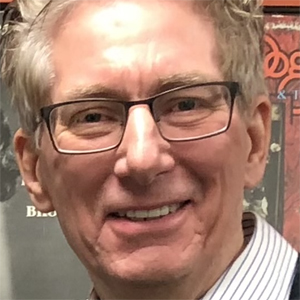
Please consider joining the movement to save WisconsinEye by going to wiseye.org/donate. Your donation is tax deductible. Your Right to Know is a monthly column distributed by the Wisconsin Freedom of Information Council (wisfoic.org), a nonprofit, nonpartisan group dedicated to open government. Jon Henkes is the president and CEO of Wisconsin Eye.

Wausau stations name new news director

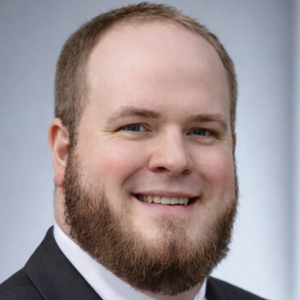
Jacob Wilson is joining WSAW-TV/WZAW-TV in Wausau as news director starting Jan. 22.

Wilson will lead the stations’ daily news operation and special projects, including expanding and elevating work on digital platforms.

He most recently led the morning team at WTTV/WXIN, the CBS/FOX duopoly in Indianapolis.

“It’s an absolute privilege to step into the role of News Director at WSAW,” Wilson said. “For the past decade, I’ve had the honor of growing, learning and serving in my hometown market of Indianapolis. I’m excited to bring that experience to this talented, dedicated newsroom and I’m eager to build upon the station’s strong legacy of local journalism.” 

Wilson is a 2016 graduate of Ball State University.

Vucsko named news director at WBAY-TV

Lisa Vucsko was named News Director at WBAY-TV in Green Bay. She started Dec. 15.

She will lead the station’s newsroom, overseeing editorial strategy, day-to-day news operations, digital integration, and investigative projects.

Vucsko is an award-winning newsroom executive with more than 28 years of experience working in and leading Midwest, cross-platform news operations. Most recently, she served as Assistant News Director at FOX TV News in Chicago where she directed newsroom operations, led digital transformation initiatives, and managed investigative and special projects. In that role she implemented newsroom efficiency programs, partnered with digital teams to elevate real-time storytelling, and produced special political programming and investigative content.

Vucsko also served as Managing Editor at the same station, where she executed content strategy across all platforms, supervised editorial direction for more than 70 staff members, and led newsroom integration for major events including national elections and large-scale live broadcasts.

She began her career in assignment and editorial roles, building a strong foundation in breaking news logistics, story sourcing, and field coordination. She holds a Bachelor of Science in Broadcast Communications from the University of Illinois, Urbana-Champaign.

“This is an exceptional newsroom with a strong commitment to quality, community, and impactful storytelling, and I’m excited to contribute and collaborate as we continue doing meaningful work for the viewers who depend on us,” Vucsko said. “Can’t wait to get started!”

Column: The problem with the will to secrecy

In 2018, a mobile home park owner in Stevens Point lost his operator’s license after submitting falsified drinking water samples to the state, purportedly leaving longtime residents of the park at risk of consuming excess iron and manganese. He appealed.

In 2022, the Wisconsin Department of Natural Resources authorized the spreading of human waste on farmland in Vilas County. A nearby Indigenous tribe contested the permit when it became apparent the state hadn’t included sufficient setbacks from tribal land.

And in 2021, a wildlife rehabilitator in Frederic, Wisconsin, who also served as a local police chief, her rehabilitation license after a raccoon in her care — Gimpy — bit an employee. The rehabilitator appealed.

These cases, all of which went to administrative hearings, pit state regulatory authority against individual residents. That’s why I was interested in reading them in my role as an investigative reporter. But I learned vital information in these and other cases, nearly always the parties’ names and places of work, is missing. 

Wisconsin’s Division of Hearings and Appeals, the agency that oversees administrative hearings for several state departments, has taken to posting only heavily redacted records on its website. That means readers will often see black bars drawn through the names of people and businesses, state employees who evaluate permits and licenses, attorneys who represent parties and even newspapers that publish notices related to the cases.

Division Administrator Brian Hayes told me that last year’s passage of a prompted the DHA to evaluate how it posts personally identifying information on its website. That enables judges to request that their personal information, including addresses and telephone numbers, be removed from public view. 

The DHA, Hayes said, extended this protection to witnesses and petitioners, saying disclosing this information “needlessly opens up litigants to scams and stalkers.”

Hayes noted, however, that personally identifying information likely would have to be released to someone who submitted a records request for unaltered documents.

So I submitted one.

It took two months and the assistance of an attorney to wrestle the name of Gimpy’s owner from the agency. (Gimpy, however, was named.) The employees I encountered in this process offered a moving target of justifications.

First, DHA’s records custodian said she can provide unredacted documents only to parties to a case and suggested that I request the redacted version. I pointed out that the law requires her to either release the requested record or offer a legal justification for withholding it.

Another employee cited Wisconsin’s , which provides a bill of rights for witnesses and victims of crime. The problem with this excuse is that the protections are situated in Wisconsin criminal code, not licensing.

In the end, I received unredacted records in the raccoon case and an apology from DHA for the difficulties I encountered in obtaining this information. But I still am moved to question the will to secrecy at the heart of this matter.

In fact, many of these cases involve public hearings. Anyone who attended could presumably observe witnesses and evidence — or see the names of parties on public notices state agencies post to announce hearing schedules.

When protective laws are zealously applied to contexts for which they were not intended, it can cause its own form of harm. The public is circuitously deprived of information related to potentially unscrupulous activity on the part of both individuals and government.

It shouldn’t take an attorney to pry open the gates for administrative decisions, even if the state means well.

Your Right to Know is a monthly column distributed by the Wisconsin Freedom of Information Council (), a nonprofit, nonpartisan group dedicated to open government. Bennet Goldstein is an investigative reporter with Wisconsin Watch.