Monthly Archives: September 2025

Andrea Albers named morning co-anchor on WTMJ-TV

Andrea Albers will step into the role of morning co-anchor on TMJ4 News Today on WTMJ-TV in Milwaukee.

Albers joined the station in 2021 as a reporter and anchor. Most recently, she has been guiding the Milwaukee area through the morning commute as TMJ4’s traffic anchor, and as the station’s consumer reporter.

Albers joins Adriana Mendez at the anchor desk.

A proud Wisconsin native, Albers hails from Iola and is an alumna of UW-Eau Claire’s broadcast journalism program. She launched her career at WQOW News 18 in Eau Claire, later becoming a longtime evening anchor and contributor to important community initiatives — including helping launch the Jefferson Awards in western Wisconsin to honor local volunteers and promote positive action.

Albers also held anchor and newsroom management roles at WXOW News 19 in La Crosse, where she led an hour-long midday newscast.

During her time at TMJ4, Andrea reported on Milwaukee’s reckless driving epidemic as part of the station’s initiative Project: Drive Safer. She also covered major regional news events including the Kyle Rittenhouse trial, the Waukesha Christmas Parade attack, the 2024 Republican National Convention and, more recently, the catastrophic flooding that hit Milwaukee in August.

Her work has been recognized with awards from the Wisconsin Broadcasters Association, the Midwest Broadcast Journalists Association, and Emmy nominations.

“Andrea’s deep roots in Wisconsin and her commitment to impactful storytelling truly embody TMJ4’s mission to connect with and empower the communities we serve,” said Tim Vetscher, TMJ4 news director. “We’re thrilled to have Andrea take on this new role alongside Adriana.”

“I’m truly honored to step into this role and help start the day alongside our viewers across southeast Wisconsin,” Albers said. “Being part of TMJ4 News and sharing the stories that matter most is incredibly rewarding. I look forward to connecting with new faces each morning and continuing to serve our community with journalism that makes a difference.”
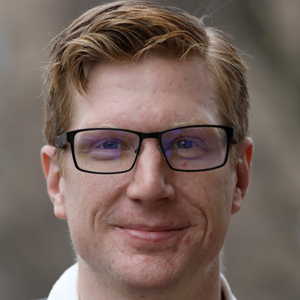
Column: ‘No comment’ is no help to the public

As homelessness grows across Wisconsin, social service agencies are feeling a crunch. The federal government is slashing funding for tackling the problem, and state lawmakers aren’t helping much either. 

Reporters for Wisconsin Watch, the nonprofit news organization for which I work, unpacked those challenges in a . They noted the Legislature’s budget writing committee rejected a $24 million proposal by Gov. Tony Evers to boost funding for homelessness support services and shelter operations. 

The reason? Committee leaders won’t say. 

The 2,358-word story included perspectives of multiple service providers and policy experts, but the lawmakers were conspicuously absent. My colleagues sent multiple requests for comment to four members of the committee, including its two co-chairs. One declined an interview request. The others did not reply.

The silence leaves the public guessing. 

Do the lawmakers disagree on the scope of the problem? Do they think money can be better spent on other issues? How much is just politics between a Republican-controlled committee a Democratic governor? 

We don’t know, because they won’t tell us.

It’s hard to address homelessness — or any complex challenge —  if we don’t even know where leaders stand.

Unfortunately, independent journalists are growing accustomed to being ignored. In a trend spanning multiple levels of government and political parties, public officials are increasingly avoiding answering inconvenient questions about matters of public concern. They’re sending generic statements instead of agreeing to interviews that are more likely to yield clarity. That’s if they respond at all. 

It’s happening in Wisconsin and beyond.

“Patterns of media evasion and selective engagement have become the norm for many newsmakers. They may work with media that are friendly to or aligned with the source’s views, resulting in little to no accountability questions or pushback,” a 2024 Poynter Institute report. “Many sources who once engaged with reporters, even if grudgingly, have become masters of media avoidance.” 

Such tactics are less harmful to journalists than they are to constituents. We ask questions on behalf of the public — not to satisfy our own curiosities. Ignoring us is ignoring the public. 

In Wisconsin, the silence means less information on everything from to the or . 

Earlier this year, a McFarland man who arrived three years ago from Cuba attended what he thought would be the first hearing in his asylum case —  after following steps laid out by the federal government. Instead, a judge dismissed Miguel Jerez Robles’ case and agents with  Immigration and Customs Enforcement arrested him.

“He had everything in order, and he was arbitrarily arrested and placed in expedited removal when he doesn’t qualify to be in expedited removal,” his attorney the Capital Times and Wisconsin Watch. 

The news outlets reached out to ICE for comment. It did not respond. A month after his arrest, the man was released, still with . 

Thankfully, such stonewalling is not universal. Some officials still value transparency, agreeing to interviews that help the public understand their actions. It’s probably not always easy. Engaging with journalists takes time and energy, and requests may flow in with tight deadlines.

But their constituents are better off for it.

While writing this column, I emailed the four lawmakers who did not comment during Wisconsin Watch’s homelessness reporting in July: Rep. Mark Born, R-Beaver Dam; Sen. Howard Marklein, R-Spring Green; Sen. Romaine Robert Quinn, R-Birchwood; and Sen. Eric Wimberger, R-Oconto. I offered a fresh chance to discuss their vote and share their perspectives on receiving media requests. 

None of them responded. 

Your Right to Know is a monthly column distributed by the Wisconsin Freedom of Information Council (), a group dedicated to open government. Council member Jim Malewitz is managing editor of Wisconsin Watch.