Monthly Archives: July 2025

Morrissey, Kihmm promoted at WKOW-TV

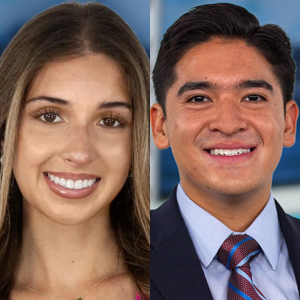
Madison TV station WKOW-TV is promoting two journalists on its news staff.

Chloe Morrissey is being named weekend anchor. She was previously serving as a multimedia journalist.

Morrissey has been with the station for almost two years.

“Chloe is an outstanding journalist and a great team member,” said WKOW-TV News Director Dani Maxwell. “Our viewers are already familiar with Chloe’s great work. She is excited to expand her relationship with our weekend evening viewers.”

Morrissey is a graduate of Loyola University Chicago with cum laude honors, majoring in multimedia journalism with a minor in political science. She was born and raised in the northern suburbs of Chicago and is excited to continue to remain in the Upper Midwest.

Lucas Kihmm is being named anchor of Wake Up Wisconsin Weekends from 6-7 a.m. He was previously serving as a multimedia journalist.

Kihmm has been with the station for more than a year.

He graduated Magna Cum Laude from Loyola University Chicago. He majored in multimedia journalism with a minor in Spanish language. Khimm is from Fremont, California.

“These two not only have the skills to excel with their own broadcasts, they’re going to be a lot of fun to watch,” Maxwell said.

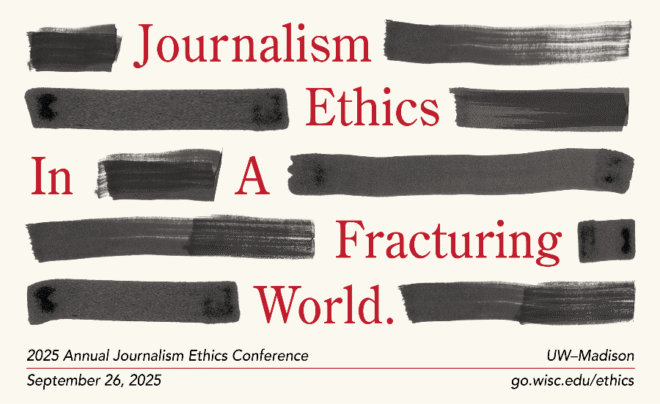
UW’s Center for Journalism Ethics to host ‘Journalism Ethics in a Fracturing World’ conference 

The Center for Journalism Ethics at the University of Wisconsin-Madison will host its 16th annual journalism ethics conference at the Wisconsin Institutes for Discovery on Friday, Sept. 26.

The conference is free, open to the public and made possible by generous sponsorships from craig newmark philanthropies, the Evjue Foundation, Podcamp Media, the Wisconsin Newspaper Association and the Wisconsin Broadcasters Association.

Journalism Ethics in a Fracturing World” will bring together news media professionals, innovators, academics, advocates, students and the public to address the ethical dimensions of a media environment characterized by fragmentation, increasing authoritarianism and disappearing and unreliable data. Participants include nationally renowned experts such as Keith Woods (formerly of NPR), Kara Swisher (VOX Media) and Ben Smith (Semafor). 

The rapid and far-reaching changes to government during the second Trump administration are presenting journalists and media makers with a monumental three-part task: being responsive to a transformed information environment, evolving media ethics in the face of disappearing norms and defending the press’s right to exist. The Sept. 26 conference will provide a thoughtful forum for attendees to better understand the challenges, opportunities and pressures of this moment. 

Top tech reporter Kara Swisher will interview Ben Smith, co-founder and editor-in-chief of Semafor, for her Vox podcast “On with Kara Swisher.” Keith Woods, former chief diversity officer at NPR, will deliver a keynote in defense of journalism in a free and fair democracy. Other panelists will take on key conversations such as “The New Age of Censorship” and “Spin, Lies and Disappearing Data.” 

“Journalism is facing greater challenges than I have seen at any point in my lifetime,” said Kathleen Bartzen Culver, James E. Burgess Chair in Journalism Ethics and director of the Center. “It’s a time to be courageous and to defend the values and ethics that have long guided the best journalism. This conference will be a clarion call for journalism’s continued service to citizens and an exploration of what practices can help people live free and meaningful lives.” 

The Center for Journalism Ethics, housed in the School of Journalism and Mass Communication at UW–Madison, provides an international hub for the examination of the role of professional and personal ethics in the pursuit of fair, accurate and principled journalism. The Center offers resources for journalists, educators, students and the public, including internationally recognized annual conferences exploring key issues in journalism.

craig newmark philanthropies supports groups that seek to strengthen American democracy. The foundation drives civic engagement by working to advance organizations focused on trustworthy journalism, cyber security, and veterans and military families. Craig Newmark is the founder of craigslist. 

The Evjue Foundation is the charitable arm of The Capital Times newspaper. Since its founding in the 1960s, the Foundation has made grants totaling more than $70 million to worthy educational, cultural and charitable organizations in the newspaper’s circulation area. 

Additional sponsors include Podcamp Media, the Wisconsin Broadcasters Association and the Wisconsin Newspaper Association. 

For more information, see the conference web page and/or contact Krista Eastman, administrator and communications specialist at the Center for Journalism Ethics, at krista.eastman@wisc.edu

Walsh named noon and 4 p.m. anchor on CBS 58

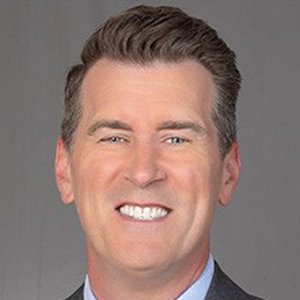
Bill Walsh has been named anchor of the CBS 58 (WDJT-TV) News at Noon and 4 p.m.

Walsh takes over for Mike Strehlow, who announced his semi-retirement earlier this summer. Strehlow is stepping back from anchoring newscasts and will continue to serve as host and producer of “CBS 58 Sunday Morning” each week.

“I’m honored to accept this role at CBS 58,” Walsh said. “It’s a privilege to take on this responsibility, and an even greater one to follow in the footsteps of someone as trusted and steady as Mike Strehlow.”

“Bill is a fantastic anchor who brings warmth and heart to his broadcasts,” said Jessie Garcia, News Director of CBS 58. “Viewers already know and respect him, and this new team will carry on our tradition of hometown excellence.”

Walsh joined CBS 58 in April 2013 and is currently the anchor of the CBS 58 weekend evening news. He will officially join Amanda Porterfield and meteorologist Rebecca Schuld on the CBS 58 News at Noon and 4 p.m. on Monday, Aug. 25. A new anchor for the CBS 58 weekend evening news has not yet been named.

Column: When transparency is disregarded

Last month, the Wisconsin town of Hazelhurst discussion of a proposed ordinance due to a typo. The meeting agenda had incorrectly listed “wake board” instead of the intended “wake boat.” Said town chairman Ted Cushing, “I’m not going to violate the Open Meetings Law.”

It was the right call, one that affirms my belief that public officials in Wisconsin are, by and large, intent on complying with the state’s openness laws. But, sadly, this is not always the case.

Recent weeks have brought forth two of the most egregious violations of the public’s right to know that I have seen in more than three decades of tracking openness issues on the Wisconsin Freedom of Information Council. 

The first happened in the village of St. Francis, south of Milwaukee, on June 2. Megan Lee, a reporter for television station TMJ4, and photographer Dan Selan tried to attend a meeting of the St. Francis school board. The district superintendent, Deb Kerr, confronted Lee, in an exchange that Selan on video (see ).

“You are not allowed to come to our meetings because you did not give us any notice or tell us why you were here,” declared Kerr, saying she had just spoken with the district’s lawyer. “Like you said, it’s an open board meeting, but you’re not filming.” When Lee pressed for an explanation, Kerr replied, “I’m going to ask you to leave now, and if you don’t leave, I’ve already told you, I will call the police.” Thankfully, this did not occur. 

For the record, no one is required to give advance notice before attending a public meeting. And the state’s Open Meetings Law, at , expressly directs all public bodies to make a reasonable effort to accommodate any person desiring to record, film or photograph the meeting,” so long as it is not disruptive.

Kerr, a one-time for state school superintendent, did apologize, sort of, “I wish I had handled it differently.” TMJ4 has a verified complaint against the school district with Milwaukee County’s Corporation Counsel, the first step toward possible legal action.

The second transgression involves Steven H. Gibbs, a circuit court judge in Chippewa County. Gibbs recently issued an that not only barred the media from recording witness testimony at pretrial evidentiary hearings but also instructed that they “may not directly quote the testimony of the witnesses, and may only summarize the content of the testimony,” or else face contempt proceedings.

“Wow, this is quite the court order,” said Robert Drechsel, a UW-Madison professor emeritus of journalism and mass communication and expert on media law and the First Amendment, when I asked for his thoughts. He cited a 1976 U.S. Supreme Court , Nebraska Press Association v. Stuart, which limited judges’ ability to impose constraints on media, requiring that they consider less restrictive alternatives and ponder whether the order would be effective.

That was not done here. And, in fact, requiring summation over quotation “would be more likely to introduce a risk of error and possible prejudice,” Drechsel said. “So no, I do not think the judge can prohibit the media from directly quoting what they hear during an open court proceeding. And I don’t think it’s a close call.”

Judge Gibbs, asked under what authority he was forbidding direct quotation, cited a that allows judges to “control the conduct of proceedings” before them. Gibbs said he believes in the First Amendment and freedom of the press but “my concern is a fair jury pool in this matter not tainted by any media reports” about evidence that may or may not be introduced. He did not explain how threatening the media for trying to be as accurate as possible would achieve this end. (For links to and ’s full responses, see this column online.)

The truth is that public officials, even if they’re well-intentioned, sometimes broadly overstep. Let’s just be grateful that this is the exception and not the rule. You can quote me on that.

Your Right to Know is a monthly column distributed by the Wisconsin Freedom of Information Council (), a group dedicated to open government. Bill Lueders is the group’s president.