Monthly Archives: May 2025

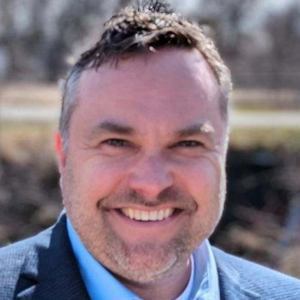
Wescott to join Big Radio in Monroe

Josh Wescott, former radio news director and host of a top ranked morning show in the Madison market, has joined Big Radio stations in Monroe and Freeport to enhance the company’s local news presence.

Wescott worked in the Madison radio market as news director for WIBA-AM for more than five years. He led a team of local journalists and anchored an award-winning newscast that earned accolades as winner of “Best Newscast, Major Market” from the Wisconsin Broadcasters Association. Wescott was host of the top ranked “Madison in the Morning” local news program for several years.

“Good journalism requires a lot of good listening and attention to what matters most to those in the communities they call home,” Wescott said. “Our news will talk about what people are talking about, be factual, and will ask the next question so people can reconnect with their local communities and schools in a way that journalism hasn’t consistently afforded in recent years.”

Prior to coming to Big Radio, Wescott spent 13 years overseeing day-to-day operations of Dane County government, where he was responsible for helping construct annual operating and capital budgets around $900 million. He helped design, implement, and administer a wide range of public policy to enhance public safety, mental health, and water quality. In addition to his many years’ experience in local government administration, Wescott will mark 25 years this summer working in emergency medical response. He serves as a deputy chief for two area emergency medical services departments and as an instructor for two Wisconsin technical college districts.

“Online and social media disinformation is steadily driving people back to how they used to find out what’s happening, and Big Radio is well-positioned to meet this moment and lead the re-emergence of local radio news in this region and beyond,” Wescott said.

Wescott will serve as morning drive news anchor for stations in Monroe and Freeport and regularly report on news stories of local and regional interest. He joins a Big Radio news and sports department consisting of nearly 35 professionals who provide local news seven days a week, 365 days a year and broadcast more than 500 local high school sporting events a year.

Big Radio owns and operates ten radio stations in Monroe, Freeport, Janesville, and Beloit areas. Big Radio is owned by father and son Scott and Ben Thompson.

Column: When people die, openness matters 

In any community, the role of the medical examiner is vital.

Medical examiners — or coroners, in the nearly half of Wisconsin’s 72 counties that have them as an alternative — determine the cause and manner of death, support the criminal justice system and track data to identify trends that can impact public health and safety.

For me and other Milwaukee-area journalists, the insights provided by the Milwaukee County Medical Examiner’s Office are integral to our coverage, providing crucial details and important context. Among the recent examples where the level of openness has played a key role are the COVID-19 pandemic, the tragic deaths of three men due to extreme cold last January and the high-profile case of D’Vontaye Mitchell last June.

Traditionally, the office has supplied “demographic reports” as well as “narrative reports.” Demographic reports include information such as the name of the deceased, where the death occurred, and the name of a family member who was notified. Narrative reports, in contrast, delve into the circumstances surrounding each case.

“Narrative reports are particularly illustrative when compared to other available public information,” wrote David Clarey in the Milwaukee Journal Sentinel in March. “Contextual information, such as whether a driver ran a red light or if a homicide resulted from a heated argument, is often missing (from demographic reports) and requires time-consuming requests from media and families alike.”

The media in Milwaukee were pleased with the level of openness we experienced from Karen Domagalski, the longtime operations manager for the Milwaukee County Medical Examiner’s Office. But when Domagalski retired on Feb. 19, the county’s medical examiner, Dr. Wieslawa Tlomak, announced a change in policy. Henceforth, she said, the office would stop sharing narrative reports until investigations were concluded and cases closed. She acknowledged that this shift represented a significant change in past practices.

Concerned by the change in policy, several news executives, including me, sent Tlomak a letter on April 4. It read, in part:

“The decision to curtail access to these preliminary findings poses a troubling scenario for our news organizations and, more importantly, for the residents of Milwaukee County. Withholding this essential information may leave the public waiting weeks, months, or even longer for basic insights into the circumstances surrounding the deaths of community members. This delay not only hampers our ability to keep the public informed but also undermines trust in the transparency of governmental processes.”

The letter noted that having access to narrative reports helps “clarify the circumstances” surrounding deaths and fosters “a better understanding among citizens about the events that impact their safety.”

Tlomak replied to our letter nearly three weeks later on April 23rd. Her response read, in part:

“I recognize that this shift in operational policies and procedures is new to members of the media that cover death investigations and public safety matters in Milwaukee County. After an internal review of operational policies and procedures, it became apparent that it is not within the ME’s Office mission and purpose to provide inaccurate and/or incomplete information to the public, as the disclosure of these draft details have the potential to cause significant harm to family members most affected by a death.”

Here’s my response to that: Dr. Tlomak, if your concern is releasing inaccurate information, the appropriate next step would be to correct the information rather than stopping its release altogether. I urge you to work with the journalists who rely on the reports provided by your office to develop a solution that ensures timely access to vital information without compromising the integrity of ongoing investigations.

Transparency is crucial for maintaining public trust.

Your Right to Know is a monthly column distributed by the Wisconsin Freedom of Information Council (wisfoic.org), a group dedicated to open government. Tim Vetscher, a Council member, is news director at TMJ4 in Milwaukee.