Monthly Archives: December 2024

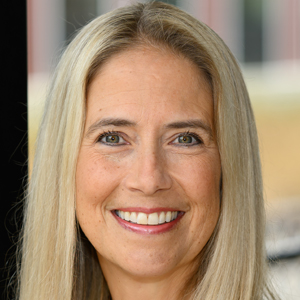
Sarah Carlson returns to News 3 Now in Madison 

Sarah Carlson is returning to the anchor desk at News 3 Now (WISC-TV) in Madison, marking a comeback over epilepsy. After an 11-year hiatus, Carlson is returning to co-anchor the 6 p.m. and 10 p.m. newscasts alongside Eric Franke.

During her time at News 3 from 2010 to 2013, Carlson, who was known for her commitment to journalism and her engaging presence on air, was diagnosed with epilepsy and doctors advised her that continuing to anchor was no longer an option due to the severity of the seizures she was experiencing.

Carlson stepped away from her position and moved to Chicago to focus on her health. She said that for several years, she dedicated herself to managing her condition, undergoing treatments, and adjusting to her new life. After years of perseverance and a change in her treatment plan, Carlson said her epilepsy is better controlled and she is ready to return to her true passion, reporting the news.

 “I’m incredibly excited to return to News 3 Now,” Sarah said. “This has been a long journey, and I’m proud of how far I’ve come. I look forward to reconnecting with the community and continuing to do what I love—telling important stories.”

 Kyle Fobe, News Director, News 3 Now, said, “From the moment I met Sarah, I knew she was the right person to be our next evening anchor. She’s a community advocate, has overcome adversity, and wants to help others fight the good fight. Her story is inspiring, and I can’t wait for viewers to meet her as she starts to get out in the community, tell stories, and champion causes. We welcome Sarah to our anchor desk and newsroom this January.”

 “Sarah is the complete package of inspiration, positivity, professionalism, advocacy, and authenticity. We are so thrilled to have Sarah back in the News 3 Now family,” said Lyle Banks, Vice President and General Manager, WISC-TV.

Investigative journalism competition offers cash prizes

From Alvimann on Morguefile

Investigative reporters are highly trained to uncover and expose stories that reveal critical information that may not be immediately apparent or readily accessible. However, pursuing these stories is no simple task, which is why the Wisconsin Newspaper Association and the A-Mark Foundation have established a new $15,000 cash prize for reporters and newsrooms in Wisconsin, including broadcast journalists.

Eligibility Criteria

·     Who Can Apply: Open to all news media organizations based in Wisconsin, including newspapers, radio and TV broadcast outlets, and digital-only platforms.

·     Publication Dates: Entries must have been published or aired between Sept. 1, 2023, and Aug. 31, 2024.

·     Eligible Work: Both standalone pieces and series are eligible for submission.

·     Who Can Submit: Individual reporters, editors, and freelance journalists based in Wisconsin are welcome to apply, provided their work has been published or aired by Wisconsin-based news media organizations.

Judging Criteria

This award will recognize excellence in investigative reporting. Submissions will be evaluated based on the following core criteria. Not all elements need to be present in every submission, but reporting should demonstrate excellence in some or all these areas:

·     Quality of Journalism: Judges will look for well-researched, thorough work that provides new insights or brings important issues to light. Whether it is investigative, solutions-oriented or service journalism, the work should be grounded in strong journalistic principles, such as accuracy, fairness and accountability. 

·     Quality of Presentation: Submissions should be clear, compelling and effectively presented in their chosen format(s)whether it is written, audio, video or multimedia. Judges will assess how well the story is structured, how accessible and engaging it is for the intended audience, and the integration of visuals, data or other storytelling elements that enhance understanding.

·     Responsiveness to Community Needs: This criterion focuses on how well the reporting responds to the needs of the community it serves. Judges will consider how the reporting reflects community input or engagement, whether through direct collaboration, feedback or active listening. Solutions journalism that addresses specific local challenges or service journalism that provides essential, actionable information to the public is highly valued.

·     Impact: Judges will evaluate the demonstrated or potential impact of the reporting. This can include raising awareness of critical issues, sparking public dialogue, influencing policy or providing practical solutions that lead to tangible changes. Impact also encompasses how the reporting benefits the community or advances public understanding in meaningful ways.

The contest will be administered by the Wisconsin Newspaper Association Foundation and judged by a committee of retired Wisconsin newspaper and broadcast journalists, as well as representatives from the University of Wisconsin School of Journalism and Mass Communications.

The deadline to enter is Monday, Jan. 20, 2025.

Apply here

Upload a .pdf or .jpg of the print or online only entries OR an .mp4 or .mpg of video or audio files.

Up to five supporting pieces may be submitted per entry.

Prize Details

Winners will receive the following prizes. Winning submissions with multiple journalists or newsrooms will split the relevant prizes.

First place: $5,000 for the journalist(s) and $2,500 to the news organization
Second place: $3,000 for the journalist(s) and $1,500 to the news organization
Third place: $2,000 for the journalist(s) and $1,000 to the news organization

The A-Mark Awards will be presented on the evening of March 7, 2025, at the Wisconsin Newspaper Association Annual Convention in Madison.

Adriana Mendez named co-anchor for TMJ4’s morning newscast

Kenosha native Adriana Mendez has been named to a co-anchor post on the TMJ4 (WTMJ-TV) morning newscast in Milwaukee.

Mendez will anchor alongside Tom Durian weekday mornings from 5 a.m. to 7 a.m. She’s been the traffic anchor on the show since 2019.

Mendez said she’s excited to expand her contributions to the broadcast.

“I grew up watching TMJ4 and could not be more honored to take on this new role for the TV station that has meant so much to me in my life,” Mendez said. “Journalists like Carole Meekins and Susan Kim have been professional and personal role models for me, so to be added to the news anchor team here is humbling.”

Before joining TMJ4 News in 2018 as a reporter, Mendez’s journalism career took her to Waco, Texas, Grand Rapids, Michigan, and Asheville, North Carolina. She is a graduate of the University of Wisconsin-Parkside.

“Adriana is one of the hardest working people I know,” said Tim Vetscher, news director at TMJ4. “She’s also the first person to recognize other co-workers for good work. So, not only is she a strong journalist, but she is also a great teammate. We could not be more thrilled that Adriana is taking this next step with TMJ4 News.”

Mendez will begin news anchoring full time the week of Dec. 9.

Column: Long waits undercut records law

The other day, in my role as an advocate for open government, I heard from a Wisconsin resident who has waited more than five months for records he requested from a local law enforcement agency. He has gently prodded the agency several times, asking, “How much more time is my request going to take?” More than three months have passed since these queries have yielded a response.

Such long, frustrating wait times are not uncommon. Wisconsin’s Open Records Law allows any person to obtain any document in the possession of state and local government officials, with limited exceptions. But, unlike in some other states, there is no set time limit. Rather, the law simply directs record custodians to act “as soon as practicable and without delay.”

What does that mean? Good question.

The state Justice Department has said that “10 working days is a reasonable time for an authority to respond” to simple records requests. But this is not binding advice. Moreover, no court has ever ruled that a particular wait-time was excessive.

I tell people experiencing long wait times to practice their “Ps”: Be polite. Be persistent. And be pragmatic — offer to clarify or refine your request to make it more manageable. Sometimes, this  helps move things along. Other times, it seems to make no difference.

That’s where Tom Kamenick comes in. He is the founder and president of the Wisconsin Transparency Project, the state’s only law firm devoted entirely to open government litigation. Since 2019, Kamenick has filed seven lawsuits alleging illegal delays in the processing of open records requests. He has lost only one case — in which the records were provided but had ended up in the requester’s spam folder.

His other six cases ended in settlements favorable to the requestors: records were provided, legal costs were covered and, in at least one case, the custodian apologized. The problem is that these settlement wins do not set a legal precedent that can be cited by others, although they do add credibility to threats of legal action.

Last year, Kamenick sued the Madison Police Department on my behalf after it told me to expect a wait time of 14 months to obtain records related to police discipline. The office hired additional staff and authorized overtime to reduce its backlog. Last month, Kamenick sued the Racine County Sheriff’s Department on behalf of a local resident, Mitchell Berman, over its long delays in producing records including video footage. “Delays like this are all too common,” Kamenick noted in a statement.

Custodians often contend they lack the staff and resources to handle requests more promptly. Kamenick’s response is to say it isn’t a question of resources but priorities. One school district he sued had a $600 million budget and assigned a single staff position devoted to records requests, then allowed that position to go unfilled. 

Indeed, the records law expressly states that handling records requests “is declared to be an essential function of a representative government and an integral part of the routine duties of officers and employees whose responsibility it is to provide such information.” That means it should be more of a priority.

Eventually the courts should weigh in on this, in a precedent-setting case. The problem also cries out for a legislative solution. A revised law could still say “as soon as practicable and without delay,” but also set a time limit of, say, 30 days, for records to be provided, absent extraordinary circumstances. Perhaps the state could provide additional funding or guidance to help make this doable —  certainly there are worse ways it could spend its $4.6 billion budget surplus.

There is an old saying that justice delayed is justice denied; the same is true for records requests. If you don’t get the records until you can hardly remember what you wanted them for, the law is not working as intended.

Your Right to Know is a monthly column distributed by the Wisconsin Freedom of Information Council (wisfoic.org), a group dedicated to open government. Bill Lueders, a writer in Madison and editor-at-large of The Progressive, is the group’s president.