 WBA Newsroom
RTDNA is bringing its annual convention to Milwaukee in 2024.
The event will be held at the Pfister Hotel June 12-14.
RTDNA is bringing its annual convention to Milwaukee in 2024.
The event will be held at the Pfister Hotel June 12-14.

From Wisconsin Watch:
George Stanley, a nationally respected veteran news leader and longtime Milwaukee Journal Sentinel editor, has been named CEO of Wisconsin Watch, effective Oct. 16.
“We are pleased that a journalist of George’s stature will lead Wisconsin Watch into the future,” said Brant Houston, chair of Wisconsin Watch’s board of directors. “He has the experience and vision to ensure that Wisconsin Watch rebuilds local news throughout the state through new initiatives and collaborations.”
Wisconsin Watch created the CEO position when the organization’s co-founders, Andy and Dee J. Hall, announced their departures in June. The Halls started the nonprofit Wisconsin Watch in 2009 and grew it into a $2 million newsroom with two dozen people.
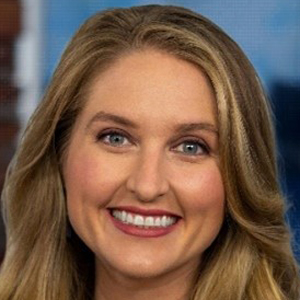
Meteorologist Dana Fulton is joining WKOW-TV’s 27 News Wake Up Wisconsin weekday mornings from 4:30-7a.m.
Fulton served four years as a meteorologist at WISC-TV in Madison. Prior to moving to Wisconsin, Fulton was chief meteorologist at WACH in Columbia, South Carolina. During her time there she also worked as a weekend manager, news anchor, multimedia journalist and meteorologist. Fulton is originally from Bartonville, Illinois and holds a Bachelor of Arts degree in communications from Western Illinois University and a Bachelor of Science degree in atmospheric science from Mississippi State University.
“We’re confident that Dana will continue WKOW’s legacy of providing our viewers with the best weather coverage possible,” said WKOW News Director Dani Maxwell. “We’re incredibly fortunate to find someone with her local experience to add to our team.”
“When the opportunity came to join the 27 News Wake Up team, I jumped at the chance to get back on the air!” Fulton said. “I’m thrilled to join the 27 Storm Track team and am looking forward to forecasting the weather right here in a market I know and love so well.”
Fulton will debut on WKOW-TV on Monday.
WKOW TV’s previous 27 News Wake Up Wisconsin Meteorologist Max Tsaparis is heading to Chicago where he’ll be working at NewsNation.

Toya Washington is joining Morgan Murphy Media to coach and mentor anchors and reporters across the company.
For Washington, this is a return to Morgan Murphy Media after interning, reporting and anchoring at WISC-TV in Madison from 1997-2002. For the past 20 years, she’s been a fixture on Milwaukee newscasts before stepping back for more time with her family at the end of 2022.
In this newly created role, Washington will visit stations for in-person coaching and connect virtually with journalists each month.
“The goal here is to help grow the skills of our journalists – period,” said MMM VP of news Colin Benedict. “Our teams have been asking for more direct feedback and coaching, and Toya has done it all successfully for more than 25 years. She’ll make an impact on day one.”
Washington caught the television news bug during a high school internship at WCCO-TV in Minneapolis. She graduated from the University of Wisconsin-Madison with a degree in journalism and women’s studies and currently serves on the Board of Visitors at the university’s School of Journalism and Mass Communication.
“My goal is to assist those dedicated to strengthening the news industry and help create, foster and grow a deeper connection between journalists and the consumer,” Washington said. “I can’t think of a better way to support both journalists and the communities we are honored to serve.”
Washington will start in this new role immediately.

The emergence of artificial intelligence could make the journalist’s search for the truth harder than ever before.
Michael Bugeja, writing for Poynter, takes on this topic today.
You can read his column here.

A newsroom in Dayton, Ohio is trying a different approach to the TV newscast, and it seems to be showing results.
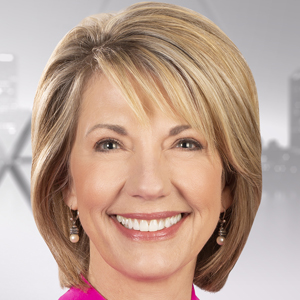
WISN-TV’s Joyce Garbaciak will co-anchor “WISN 12 News at 6:00 p.m.” exclusively starting Monday. Garbaciak made the decision to transition from also co-anchoring “WISN 12 News at 10:00 p.m.” to allow more time for her family.
“Joyce brings tremendous leadership and expertise to our newsroom every day,” said Jan Wade, president and general manager of WISN 12. “She is the epitome of professionalism and class, and also just a really nice person. We are truly fortunate that Joyce wants to continue serving our community and our viewers on ‘12 News at 6,’ and we also know how excited she is to devote more time to her family. It is truly a win-win.”
“WISN 12 News at 6:00 p.m.” will continue to feature Garbaciak alongside co-anchor Patrick Paolantonio, Chief Meteorologist Mark Baden, and Sports Director Dario Melendez. Paolantonio will cover all anchor duties on “WISN 12 News at 10:00 p.m.” until the station identifies a new co-anchor.
“This is a best-of-both-worlds scenario for me. I can continue to be part of Milwaukee’s top news team – producing stories and bringing Milwaukee viewers the news of the day,” Garbaciak said. “And there are many exciting changes happening on the family front – and this schedule will allow me to have a bigger presence there. I’m grateful for the station’s willingness to make this happen and I’m so excited for what’s next.”
An award-winning journalist with decades of experience in broadcasting, Garbaciak has been a Milwaukee mainstay for more than 30 years. She first joined WISN 12 in 2006 as a contributing correspondent, later shifting to an anchor role in 2014.
Garbaciak has received numerous accolades throughout her storied career, including seven Chicago regional Emmy Awards, a George Foster Peabody Award, an Edward R. Murrow Award, and others. In 2022, she was inducted into the Halls of Fame for both the Wisconsin Broadcasters Association and the Milwaukee Press Club. Garbaciak has also been part of the Silver Circle for more than a decade – a lifetime achievement from the Chicago region of the National Academy of Television Arts and Sciences.

As part of doing business, government agencies often maintain contact lists or distribution lists. These days those are typically email addresses, but they also can contain physical addresses or even phone numbers.
Your state legislator probably has a list of email addresses to send newsletters. Your local governmental units might have multiple lists for different purposes — phone numbers to call for volunteers, mailing addresses to send recreation department brochures, or email addresses to send weekly announcements.
What many people do not realize is that all of these lists maintained by public agencies are public information. You have a right to access and use these same contact lists. All you have to do is make a record request for them. For example, if you receive an emailed newsletter from city hall, you can ask for the list of all email addresses to which that newsletter was sent.
This isn’t a new concept. Since the 1970s, Wisconsin’s Attorney General has consistently saying that government distribution lists are public records and must be turned over, absent a showing of likely harm. The Wisconsin Supreme Court in 1984 a school to release names, addresses, and phone numbers of parents. And just this past year, in a , a state appeals court that a school had to release parent email addresses.
I sometimes hear objections that this information is private, that some random person has no right to obtain hundreds or thousands of people’s home addresses, phone numbers, or email addresses. That argument has been consistently rejected as a legal justification for non-disclosure by the courts. But even from a policy standpoint, I think, it doesn’t hold water.
There’s nothing inherently sensitive or secret about basic contact information like this. After all, the purpose of having contact information is so people can contact you. Your address tells people where they can send mail and how to find your home. Your phone number lets anybody with a phone reach out to you. The same goes for an email address.
This information used to be widely disseminated in phone books and is still readily available online (albeit sometimes for a small fee).
Can this information be abused? Sure, but that’s not the standard for deciding whether government records must be released. All information has some potential for misuse, but we have a presumption that information in government hands is public. It can only be withheld if a clear exception applies or the custodian can show a real likelihood of significant harm will be caused by the release of records.
People who are at unusual risk, including domestic abuse victims, have resources like the DOJ’s program to protect their home address at no charge.
What it comes down to is this: contact lists are a valuable resource to the government. Officials and employees use them to spread whatever messages they want. But the government shouldn’t be able to hog these lists. Government records are our records, and we have the same right to use lists of contact information obtained and maintained with our tax dollars as government officials do.
Your Right to Know is a monthly column distributed by the Wisconsin Freedom of Information Council (), a group dedicated to open government. Council member Tom Kamenick is the president and founder of the